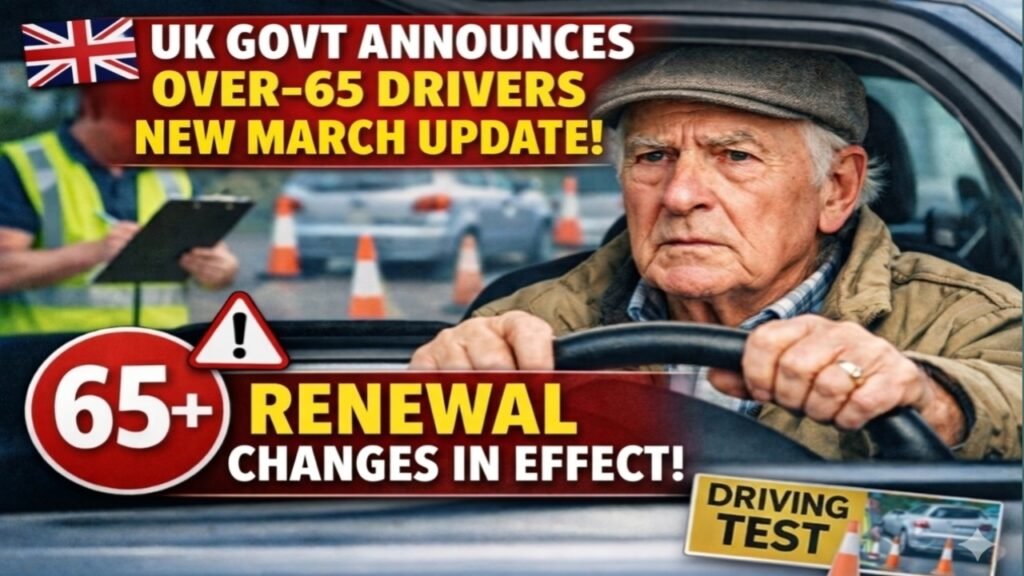
Hello Everyone, Driving is an essential part of independence for many older people across the UK. For millions of drivers aged over 65, the ability to renew a licence easily is important for everyday life, from shopping to visiting family. Recently, the UK Government announced an update related to driving licence renewals for older motorists. The change mainly focuses on improving the renewal process and ensuring road safety while allowing senior drivers to stay mobile.
The announcement has drawn attention from motorists, especially those approaching retirement age. Many drivers want to understand what the new update means, who it affects, and whether any action is required. Below is a clear explanation of the latest renewal changes for drivers aged 65 and above in the UK.
Why the Update Was Announced
The decision to update guidance for older drivers comes as the UK population continues to age. More people are remaining active and driving well into their seventies and eighties. Because of this shift, the government has reviewed how licence renewals work for senior motorists.
Officials say the aim is to keep roads safe while ensuring older drivers are not unfairly restricted. Many people over 65 are experienced drivers with decades of driving history. However, age can sometimes bring changes in health, eyesight, or reaction time.
By updating the renewal process, authorities hope to strike the right balance between independence and safety. The new guidance also simplifies procedures so older drivers can renew their licences without unnecessary confusion.
Current Rules for Older Drivers
In the UK, drivers do not need to stop driving simply because they reach a certain age. However, there are specific rules about licence renewal once motorists get older. These rules are managed by the Driver and Vehicle Licensing Agency.
At present, most drivers hold a licence that lasts until they reach the age of 70. Once they reach this milestone, they must renew their licence to continue driving legally. After that point, renewals usually take place every three years.
The renewal process typically involves confirming that the driver is still medically fit to drive. In most cases, the renewal can be completed online, by post, or through a simple form sent by the licensing authority. Many older drivers complete the process without any complications.
Key Points of the Renewal Update
The latest announcement mainly focuses on improving awareness and simplifying the renewal process for older motorists. While the core rules remain similar, the government has highlighted several areas where the process will be clearer and easier to manage. Key aspects of the update include:
- Improved communication with drivers approaching renewal age
- Clearer instructions about health declarations during renewal
- Easier online renewal options for older motorists
- Better guidance for those with medical conditions
- Stronger focus on road safety while protecting independence
Officials believe these improvements will make the renewal system more transparent. Many drivers previously felt uncertain about what was required when they reached their seventies. The updated guidance aims to remove that confusion.
What It Means for Drivers Over 65
For drivers aged 65 and above, the announcement is mostly about preparation rather than immediate change. Motorists in this age group should simply be aware of how the renewal system works as they approach the age of 70.
Drivers who are still several years away from that age will not need to take any immediate action. However, understanding the process early can make the transition smoother when the time comes.
The government also emphasises that age alone does not determine driving ability. Many people remain safe drivers for decades after retirement. The renewal system simply ensures that drivers regularly confirm their fitness to drive.
Health and Driving Requirements
One of the most important parts of the renewal process involves health declarations. When renewing a licence after the age of 70, drivers must confirm whether they have any medical conditions that could affect their ability to drive safely.
Conditions that may need to be declared include issues affecting vision, neurological conditions, or certain heart problems. In some situations, the licensing authority may request further medical information before approving the renewal.
However, most drivers do not face any problems during this stage. As long as the information provided is accurate and any medical advice is followed, renewals are usually processed smoothly.
How to Renew a Licence
Renewing a driving licence in the UK has become increasingly simple in recent years. Many drivers now complete the entire process online in just a few minutes. The online system allows motorists to confirm their details and submit their renewal request quickly.
For those who prefer traditional methods, renewal by post is still available. The licensing authority normally sends reminder forms before the licence expires. Drivers can complete the form, confirm their health declaration, and return it by mail.
Some drivers may also choose to renew at participating Post Office branches. This option can be helpful for people who prefer assistance during the process.
Tips for Older Drivers
Although the renewal process is straightforward, older drivers can take a few simple steps to ensure they remain safe and confident behind the wheel. Helpful tips include:
- Regularly checking eyesight and hearing
- Keeping up with routine medical appointments
- Avoiding driving when feeling tired or unwell
- Staying familiar with modern road rules and signs
- Considering refresher driving courses if needed
These steps can help drivers maintain confidence and safety on the road. Many organisations across the UK also offer voluntary driving assessments designed specifically for older motorists.
Road Safety and Independence
One of the biggest concerns for older drivers is losing independence. For many people, driving represents freedom and the ability to manage daily life without relying on others. The government has repeatedly stated that the goal is not to limit mobility but to ensure roads remain safe for everyone.
Statistics show that older drivers are often among the most careful road users. Their years of experience and cautious driving habits can actually reduce the likelihood of risky behaviour behind the wheel.
By maintaining a fair renewal system, authorities hope to support safe drivers while identifying situations where extra checks may be necessary.
Future Changes Could Follow
Although the current announcement focuses on renewal awareness and process improvements, experts believe further changes could appear in the future. As technology evolves, digital licence management and online services may become even more common.
Advanced driver-assistance systems in modern cars could also help older motorists continue driving safely for longer. Features such as automatic braking, lane-keeping support, and parking sensors are already making driving easier for many people.
Policy experts will likely continue monitoring road safety data and demographic trends. Any future updates will aim to protect both drivers and other road users across the country.
Conclusion
The latest update from the UK Government regarding licence renewals for older motorists mainly focuses on clarity and improved communication. Drivers over 65 do not need to worry about sudden rule changes, but they should understand how the renewal process works as they approach the age of 70. With simple health declarations and an easy application system, most drivers can continue driving without difficulty. By balancing safety with independence, the updated guidance aims to ensure that older motorists across the UK remain confident and responsible road users for many years to come.